JCB Skid Steer Loaders: Compact, Versatile and Built for the Farm
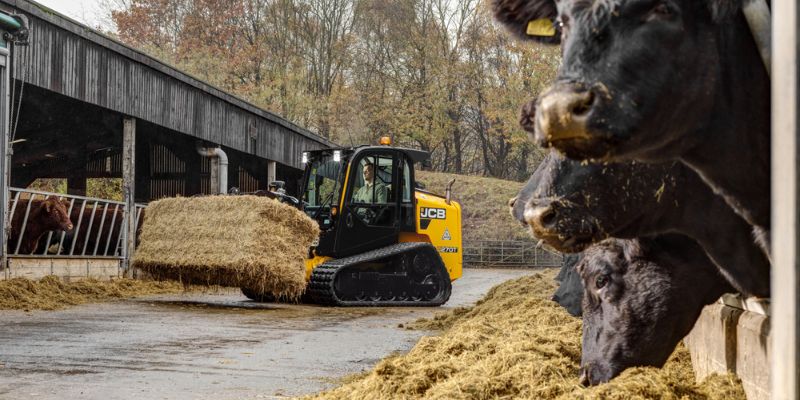
Skid steer loaders have earned a firm place on farms across Scotland, and it is not hard to see why. Their compact footprint, zero turning radius and compatibility with a wide range of attachments make them well suited to the confined spaces and varied tasks of a working farm.
From shifting muck and moving bales to loading trailers and maintaining yards, a skid steer covers ground that larger machines simply cannot reach.
At Scot Agri, we stock the JCB skid steer range for agriculture, and three models stand out for farm use:
JCB 155
JCB 270
JCB 3TS-8W Teleskid.
Here is a closer look at what each machine offers.
JCB Skid Steer and Teleskid Range at a Glance
For a quick side-by-side overview before diving into the detail, the table below covers the key specifications across all three models.
Specification | JCB 155 | JCB 270 | JCB 3TS-8W Teleskid |
Operating weight | 3,121kg | 3,852kg | 4,248kg |
Engine power | 42kW (56hp) | 55.2kW (74hp) | 55kW (74hp) |
Lift capacity (bucket) | 1,914kgf | 2,747kgf | 1,483kg retracted / 632kg extended |
Dump height | 2.26m | 2.30m | 2.30m retracted / 3.15m extended |
Lift path | Radial | Vertical | Vertical / Radial |
Width over tyres | 1.52m | 1.80m | 1.80m |
Travel speed (2-speed opt.) | 12.0 / 18.5kph | 10.9 / 20.0kph | 10.9 / 20.0kph |
Emissions standard | EU Stage V | EU Stage V | EU Stage V |
Best suited to | Compact yards, tight sheds, general livestock and mixed farm duties | Heavier material handling, bales, loading high-sided trailers and grain stores | Multi-purpose: loader, forklift, telehandler and ditch clearing in one machine |
Meet the JCB 155 Skid Steer Loader
The JCB 155 is the smallest machine in the line-up, built on a compact small platform with a radial lift path.
Weighing 3,121kg and measuring just 1.52m wide over the tyres, it fits through standard farm gates and into sheds and handling passageways where larger machines cannot go.
Despite its size, it delivers a bucket lift capacity of 1,914kgf and a dump height of 2.26m, more than adequate for feeding, bedding and general yard work.
Operating weight: 3,121kg
Engine: Kohler KDI1903, 42kW (56hp), EU Stage V compliant
Loader lift capacity with bucket: 1,914kgf
Dump height: 2.26m
Lift path: Radial
Width over tyres: 1.52m
Travel speed: 12.0kph (18.5kph with optional two-speed transmission)
The radial lift path gives strong dig force and good performance at low to mid-range height, making the 155 well suited to scraping out pens, pushing muck into heaps, loading trailers at ground level and backfilling around farm buildings.
The low boom profile on the Hi-Viz model keeps sightlines clear to the attachment and to either side of the machine, which is useful when working around livestock and in tight passageways.
Meet the JCB 270 Skid Steer Loader
The JCB 270 steps up to a large platform with a vertical lift path, giving it significantly more lift capacity and better reach at full height.
At 3,852kg and 1.80m wide, it is a more substantial machine, suited to farms and contractors handling heavier or bulkier materials.
Vertical lift means the bucket stays level as it rises, which matters for load-and-carry work with forks and for tipping accurately into high-sided trailers or grain stores.
Operating weight: 3,852kg
Engine: JCB 430 TA5-55, 55.2kW (74hp), EU Stage V compliant
Loader lift capacity with bucket: 2,747kgf
Dump height: 2.30m
Bucket tilt breakout force: 2,968kgf
Lift path: Vertical
Width over tyres: 1.80m
Travel speed: 10.9kph (20.0kph with optional two-speed transmission)
JCB's largest quick hitch pivot pins in the industry increase the 270's breakout force, so it pushes harder into dense material.
On farm, that means more effective scraping of compacted muck, firmer engagement with grain and silage, and more confident handling of round and square bales. A centralised tilt cylinder provides a higher operating capacity than older large-platform machines in this class.
Meet the JCB 3TS-8W Teleskid Loader
The JCB 3TS-8W Teleskid is the most versatile machine in the line-up. It is the only skid steer loader with a telescoping boom, giving it a reach and height capability that no standard skid steer can match.
The boom extends to provide 2.4m of forward reach and a dump height of 3.15m, while retracted it sits at 2.30m, in line with the standard models. The boom can also be lowered 1m below grade, useful for clearing ditches, scraping out channels and working in hollow ground areas around farm buildings.
Operating weight: 4,248kg (SAE)
Engine: 55kW (74hp), EU Stage V compliant
Rated operating capacity (retracted): 1,483kg
Rated operating capacity (extended): 632kg
Dump height (retracted): 2.30m
Dump height (extended): 3.15m
Forward reach (extended): 2.4m
High reach capability: over 4m
Standard: 125 lpm high-flow hydraulics, electric quick hitch, 7-way multifunction joysticks, Livelink telematics, 2-speed transmission, reversing fan, 6 LED work lights, reverse camera
On a farm, the Teleskid can load a lorry or high-sided trailer without a ramp, place feed bags or pallets at height, handle round bales with forks at a reach conventional skid steers cannot match, and clear ditches and channels below ground level.
The JCB Smoothride System and parallel lift keep loads stable during travel, and the zero turning radius lets the machine work in the same tight yards and sheds as the smaller 155 and 270.
What All Three Models Share
The 155, 270 and 3TS-8W are all built around JCB's single-arm Powerboom design, which sets them apart from conventional twin-arm skid steers. The single arm gives 60% better all-round visibility compared to traditional machines. Combined with a wide-opening side entry door, operators can enter and exit the cab safely without climbing over attachments or under an unsupported boom.
Powerboom design: single-arm layout provides 60% better all-round visibility over conventional twin-arm machines
Side entry door: safe cab access at all times, including when a large attachment is fitted
Fully welded chassis: rigid structure with solid undercarriage for strength across all ground conditions
Large cab: operator environment on large-platform models is 33% bigger than competing machines; small-platform is 46% larger
Electric over hydraulic controls: multifunction joysticks with adjustable sensitivity for precise attachment control and reduced operator fatigue
EU Stage V engines: all three models are Stage V compliant, meeting current emissions requirements
Tilting cab: can be opened in under five minutes for access to major components; daily checks are accessible at ground level via the rear service door
Industry-standard quick hitch: compatible with JCB attachments and any other brand of skid steer attachment on the market
Which JCB Skid Steer Is Right for Your Farm?
Choosing the right skid steer comes down to the type of work you do most, the spaces you work in and the lift capacity your tasks demand. Here is a practical guide to help you match each model to your operation.
Choose the JCB 155 if:
Your yards, sheds or handling passageways are narrow, and machine width is a limiting factor. At 1.52m wide, the 155 gets through standard farm gateways where larger machines cannot.
Your daily tasks centre on livestock feeding, pen scraping, bedding, muck heaps and general yard maintenance at ground to mid-range height.
You want to keep running costs manageable. The 42kW Kohler engine has a 500-hour oil service interval and is economical to run through a mixed farming year.
You need a compact, manoeuvrable machine that can work alongside livestock without dominating the space.
Choose the JCB 270 if:
You regularly handle heavier or denser materials such as compacted muck, grain, silage or large round and square bales, where the extra breakout force and 2,747kgf lift capacity make a practical difference.
You load into high-sided trailers, grain stores or hoppers where a vertical lift path and steady reach at full height are important for accurate tipping.
You want a large-platform machine with more power (55.2kW) and capacity without moving to a dedicated wheel loader.
Your sheds and gateways can accommodate the 1.80m machine width.
Choose the JCB 3TS-8W Teleskid if:
You want one machine to cover the work of several: the Teleskid replaces a conventional skid steer, a compact forklift, a telehandler and a compact wheel loader on many farms.
You need to load lorries directly, place feed or pallets at height, or reach across bays and barriers at a distance no standard skid steer can achieve.
You have ditch clearing, channel scraping or below-grade drainage work to carry out. The boom extends 1m below grade, which standard skid steers cannot do.
You want a fully specified machine from the outset: the 3TS-8W comes standard with high-flow hydraulics, an electric quick hitch, Livelink telematics, a reverse camera and LED work lights.
Your operation changes with the seasons and you want attachment versatility: the 125 lpm high-flow hydraulic circuit supports a wider range of powered attachments than standard-flow machines.
Still not sure?
If your farm sits between two of these models, the best approach is to bring one of our team out to your holding. We can look at your sheds, gates and typical working tasks, and recommend the machine that will deliver the most useful capability day to day. Contact your local Scot Agri depot to arrange a visit or a demonstration.
Jargon Buster: Key Skid Steer Terms Explained
JCB skid steer brochures and specification sheets use a number of technical terms that are worth understanding before you commit to a machine.
Powerboom: JCB's name for its single-arm loader design. Most skid steers use two loader arms, one on each side of the cab. JCB's single Powerboom sits to the left of the cab, giving the operator a clearer view to the right-hand side of the machine, the attachment and the ground ahead. It also routes hydraulic hoses internally, reducing wear and damage risk.
SAE operating weight: the weight of the machine as measured under Society of Automotive Engineers standards, which specifies what is included in the measurement (fluids, operator, and so on). Used for consistent comparison across manufacturers.
Rated operating capacity (ROC): the maximum load the machine is rated to carry safely in normal operation. On the Teleskid, ROC is quoted at two positions: retracted (boom in) and extended (boom out), because extending the boom reduces the safe working load.
Radial lift: the boom follows a curved (radial) arc as it rises. Strong at low to mid-height, good for digging and scraping at ground level. The JCB 155 uses radial lift.
Vertical lift: the boom rises in a more upright path, maintaining forward reach at full height and keeping the attachment level throughout the lift. Better for loading into high containers and trailers. The JCB 270 and Teleskid (retracted) use vertical lift.
EU Stage V: the current European emissions standard for non-road mobile machinery such as skid steers, telehandlers and tractors. All three JCB models covered in this blog are Stage V compliant.
Livelink telematics: JCB's fleet management and remote monitoring system. Livelink allows you or your Scot Agri service contact to monitor machine location, hours, fault codes and service intervals remotely, reducing unplanned downtime.
Smoothride System: a hydraulic damping feature that absorbs boom movement when travelling across uneven ground. It reduces load spillage and makes for a more comfortable ride, particularly useful when carrying materials at height on the Teleskid.
High-flow hydraulics: a higher-volume hydraulic circuit (125 litres per minute on the 3TS-8W) that powers attachments requiring more hydraulic flow, such as cold planers, mulchers and hydraulic bale wrappers. Standard-flow machines typically offer 60 to 80 litres per minute.
Industry-standard quick hitch: a standard attachment plate specification shared across most skid steer manufacturers. It means attachments from different brands are interchangeable without adaptor plates.
JCB Skid Steer Loader FAQs
What is a skid steer loader and what can it do on a farm?
A skid steer loader is a compact, four-wheeled machine that steers by varying the speed of the wheels on each side, allowing it to spin within its own footprint. On farm it can push, scrape, lift, load and carry using a wide range of attachments, including buckets, pallet forks, bale grabs, muck grabs, grapples, sweepers and augers. Its compact size and manoeuvrability make it useful in spaces where a tractor or wheel loader cannot operate.
What is the difference between a single-arm and a twin-arm skid steer?
A conventional skid steer has two loader arms, one running down each side of the cab. The operator enters from the front, climbing over the lowered attachment. JCB's Powerboom design uses a single arm positioned to the left of the cab, leaving the right side of the machine open. This gives 60% better visibility to the right of the machine and to the attachment, and allows a wide-opening side door for safe entry and exit at all times.
What is the difference between a radial lift and a vertical lift skid steer?
A radial lift machine (like the JCB 155) follows a curved arc as the boom rises, giving strong digging geometry and good performance at low to mid-range height. A vertical lift machine (like the JCB 270 and the Teleskid when retracted) lifts in a straighter path, maintaining reach at full height and keeping loads more level throughout the lift cycle. Vertical lift suits loading work at height; radial lift suits digging, scraping and ground-level work.
What is the JCB Teleskid and how does it differ from a standard skid steer?
The JCB 3TS-8W Teleskid has a telescoping boom that extends beyond the normal reach of a conventional skid steer. Retracted, it works as a standard vertical lift machine. Extended, the boom provides 2.4m of forward reach and raises the dump height to 3.15m, allowing it to load lorries without a ramp and place materials at heights no standard skid steer can reach. The boom can also be lowered 1m below grade for ditch clearing and drainage work.
Are these skid steers compatible with third-party attachments?
Yes. All three models use an industry-standard quick hitch, which means they accept attachments from JCB and other manufacturers without adaptor plates. The 3TS-8W comes with an electric quick hitch as standard; mechanical and powered quick hitch options are available on the 155 and 270.
What other skid steer models are available from JCB?
The JCB skid steer range also includes the SSL CTL compact track loader variants, which offer the same Powerboom design on a tracked undercarriage for improved traction and reduced ground disturbance on soft or uneven terrain. Speak to your local Scot Agri depot for the full range of available models.
Does Scot Agri offer warranties on JCB skid steer loaders?
Yes. New JCB machines purchased through Scot Agri come with manufacturer warranty cover. Extended warranty and service plan options are also available. For current warranty terms and what is covered, contact your local Scot Agri depot.
Do you have financing options available?
Yes. Scot Agri works with a range of finance providers to help spread the cost of a new or used machine. Options vary depending on the machine, your circumstances and current offers. Contact your local Scot Agri branch to discuss what is available.
Do you stock JCB skid steers as new, ex-demo or used machines?
We typically hold a mix of new, ex-demonstration and used JCB skid steer stock across our depots, though availability varies. Contact your nearest Scot Agri location for current stock levels, or ask about ordering a new machine to your specification.
Can I arrange a demonstration or visit a depot to see these machines?
Yes. We encourage customers to see and, where possible, operate a machine before committing to a purchase. Contact your local Scot Agri depot to arrange a visit, a demo on your own ground, or a guided walkround of the machine at our site.
What emission standard do these machines meet?
All three models are certified to EU Stage V, the current European emissions standard for non-road mobile machinery. The 155 uses a Kohler KDI1903 engine and the 270 uses a JCB 430 TA5-55; both are turbocharged diesel units with liquid cooling.
See JCB Skid Steer Loaders at Scot Agri
The JCB 155, 270 and 3TS-8W Teleskid cover a wide range of farm applications, from everyday yard and shed work through to high-reach loading and below-grade ditch clearing. To find out which model suits your operation, or to arrange a demonstration, contact your local Scot Agri depot today.